

How to build a gaming PC for beginners: What to do if it all goes wrong
How to build a gaming PC for beginners: What to do if it all goes incorrect
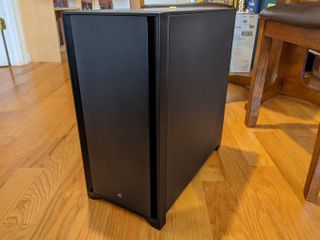
Nosotros've come to the final part of our "how to build a gaming PC for beginners" series on Tom's Guide. In the past 2 manufactures, we discussed how to select the right parts, and how to put everything together. If you're lucky, that's all you lot'll need to do, and your PC will boot upwardly perfectly the very first time, and then go on to serve yous well for many years.
Of course, nosotros live in the real world, and Spud'south Law is just every bit relevant equally Moore's Police. Given my by experiences with PC parts, I was non at all surprised when a seemingly simple issue cropped upwards on the Tom's Guide examination rig – and it took a team of experts two months to crevice the solution.
The PC that I worked so hard to build came within a minute of getting shipped off to our lab manager, and possibly dissected for parts. I don't want to frighten anyone, but the truth is that this could happen to just about whatsoever inexperienced PC builder. While it's unlikely that anyone else will run into my exact upshot, hither's how you can keep your absurd, leverage your resources and save an expensive PC from an early disassembly.
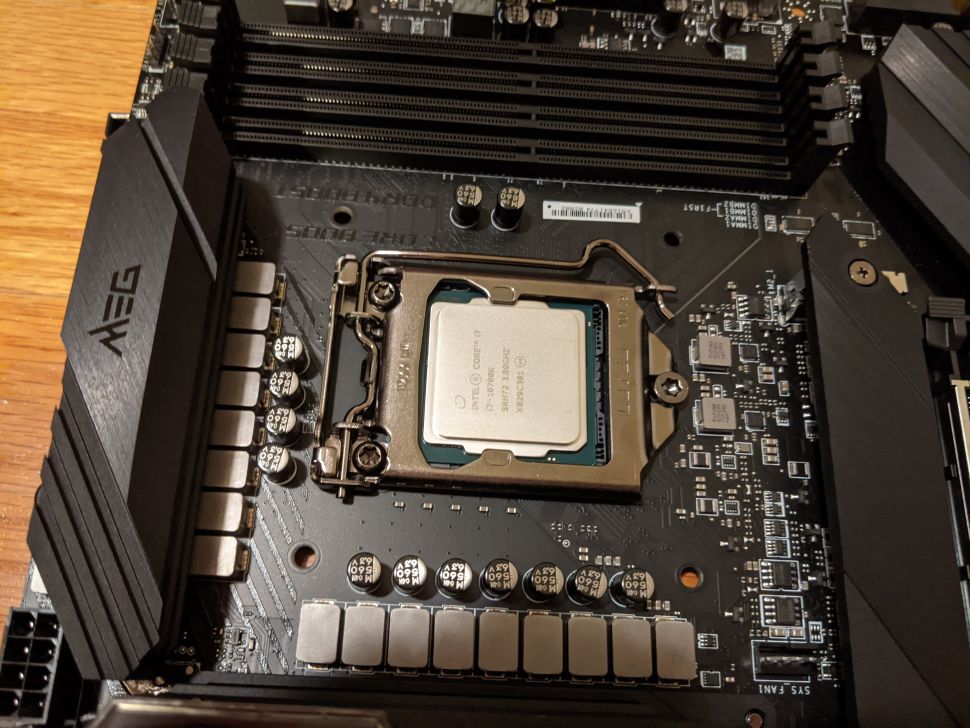
How to build a gaming PC: A tale of two boots
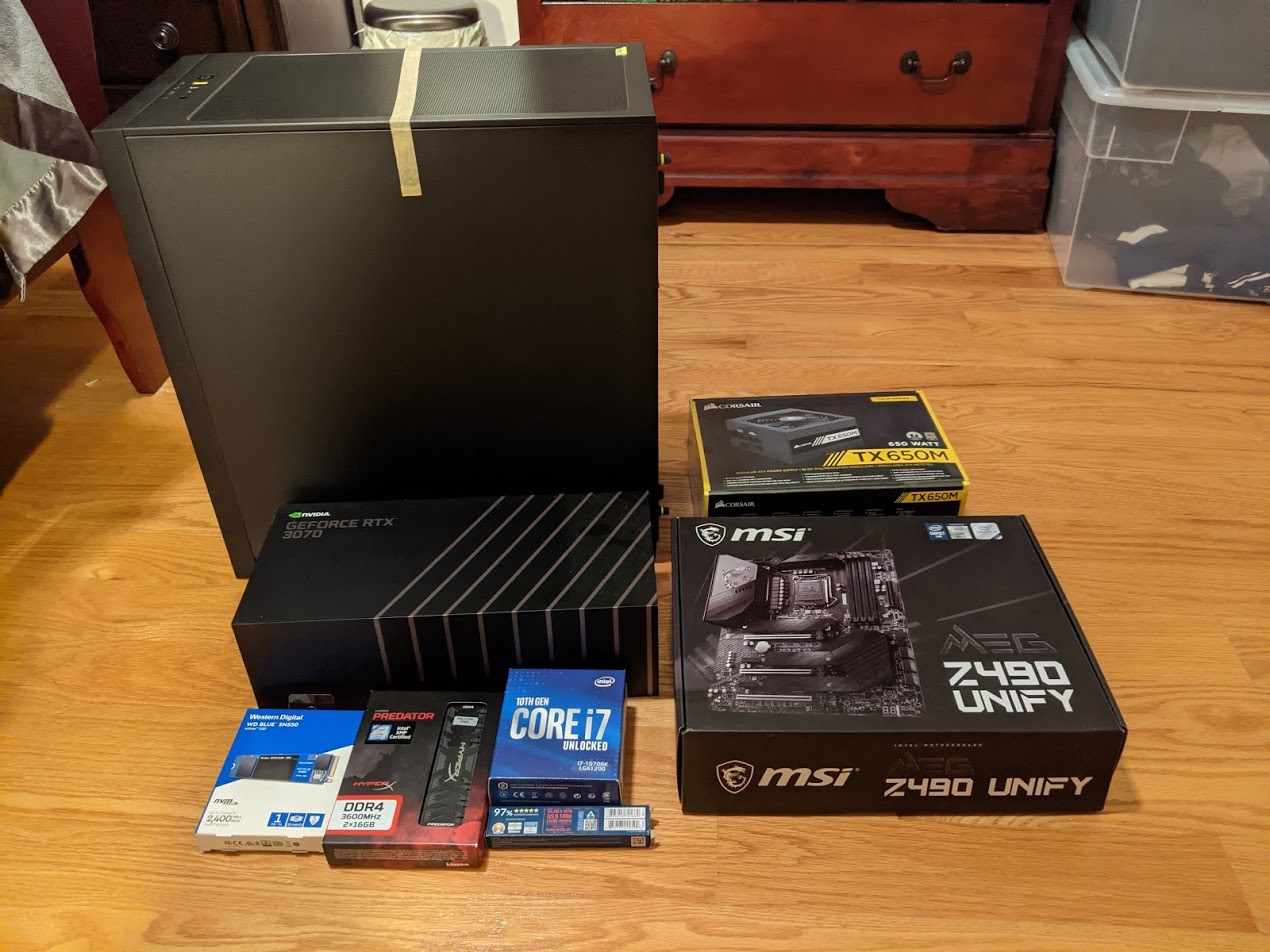
To recap the story so far: It was time to build a new gaming PC to test peripherals and software for Tom'due south Guide. I put together a list of parts, requisitioned them from various companies, and assembled them all into a fully functional PC. In that location was only one trouble: The PC didn't work properly.
Usually, it'll exist crystal clear if there'due south something wrong with a custom-built PC. If it turns on, not bad! if it doesn't plow on, it'south probably due to something existence wired incorrectly. Or, if information technology turns on merely shuts down later an hour or 2 of heavy use, information technology's probably due to something overheating. There are other things that can become wrong, just generally speaking, if all of your parts are uniform (ours were) and you've put them all in the right places (nosotros did), your PC should run like a metaphorical greased pig.
As such, I couldn't understand why the Tom's Guide test rig would start up just long plenty for the fans to first spinning, so shut downward, commencement upwardly over again, and go to Windows unremarkably. From at that place, I could use Windows for every bit long as I wanted, up to and including running demanding games for hours on terminate. I tried different power cords, different surge protectors and even dissimilar power buttons (at that place's one on our case, and one on our motherboard), but the problem persisted every time.
After a little research, I discovered that this issue is called "double-booting" — not to be dislocated with the much more than innocuous process of "dual-booting," where you run both Linux and Windows on the same machine. And, after a lot of inquiry, I discovered that double-booting doesn't bound from a single, identifiable cause. It could exist from mismanaged overclock settings; it could be from improper electrical contact on the motherboard; it could be from a faulty piece of hardware.
What I did know, though, was that double-booting is not great for hardware in the long haul. Suddenly halting hardware without proper shutdown procedures is generally very bad for a motorcar — doubly so if your hardware hasn't even had a chance to fully initialize. (Newer computers are generally better about this than older machines, merely cut the power short is still non a great idea.)
If the Tom's Guide exam rig was going to stand the test of time, I had to nip the double-booting issue in the bud.
How to build a gaming PC: How to be your own tech support
As I've pointed out in previous manufactures, the worst part of building a PC is having to be your own tech support. You tin call a manufacturer if y'all know that your effect is specifically related to a motherboard, or RAM, or a GPU, but that'south frequently hard to pinpoint. Furthermore, it's not a question of if something will get wrong with your home-built machine; it'south a question of when.
The starting time matter I did was scour the PC-building forums at Reddit, Tom's Hardware, Linus Tech Tips and similar sites, using keywords such as "PC shuts down during boot, then starts upwardly normally." Believe it or not, this actually got me a lot farther than the more general "double-booting" term, partially because Google is pretty practiced at parsing tongue searches, and partially because some Linux fans use "double-booting" and "dual-booting" interchangeably. The point is, the PC enthusiast crowd can exist a footling prickly effectually the edges, merely more often than not, they're here to help.
One of the things that experienced PC builders recommend is trying to isolate which piece of hardware is giving yous trouble. If the RAM isn't working right, for example, y'all tin can test that easily enough by inserting simply a single stick, or swapping information technology out with another set. Since I still had my former PC handy, I was able to bandy out the RAM, the ability supply and the GPU on the new examination rig. Yet, the double-booting issue persisted.
Now, at least, I knew that the trouble wasn't with those three components. A malfunctioning CPU would probably tank the whole organization, not just delay its startup process. After conferring with some of the experts at Tom's Hardware, PC Gamer and TechRadar (information technology helps that they're all sister sites of Tom's Guide), we determined that maybe there was a hardware effect with the motherboard. If you don't have friends at major tech sites, inquire around your social circle anyway. There'due south a skilful chance that someone's built a computer, and might know what to practise!
I also got in touch with MSI, and had a new motherboard in my hands a few days afterwards. Mostly speaking, you really, really exercise not want your motherboard to malfunction, considering if it does, you accept to essentially rebuild your PC from scratch. But if information technology would finish the double-booting issue, I was willing to have my chances.
That's why I felt utterly devastated when, hours later, I plugged in my newly rebuilt PC and watched it double-boot, just equally it had earlier.
I was at the end of my rope, and in that location was but i solution left: Transport the PC out to our lab manager, who would either set the problem, or see if we could repurpose the parts. Had I been building the PC without the aid of the Tom's Guide staff, the situation would have been fifty-fifty bleaker: Find a PC repair shop and crush out hundreds of dollars, on top of what I'd spent to build the thing, to go a professional diagnosis.
The unexpected solution
I'd washed pretty much all I could practise, from swapping out components, to using better-fitting screws on the motherboard, to adjusting voltages for individual parts in the BIOS. (That's the Basic Input/Output Arrangement — essentially, the motherboard'south OS earlier yous install Windows or Linux.) I had exactly three things left to do: Update the BIOS (I'd washed this on the first motherboard, simply non the 2d), wipe the SSD and send the PC out.
After I updated the BIOS, I plant myself checking its settings one last time. Was there something I'd missed? As I mentioned above, double-booting is a common problem for overclockers. Essentially, if you push a system past safe operating parameters, the BIOS will usually stop the startup process, revert to manufacturing plant settings, then restart unremarkably. It sounded and then similar to my double-booting bug, but I'd already reset the BIOS to manufactory settings a dozen times over; there was no way it could still be attempting to overclock hardware.
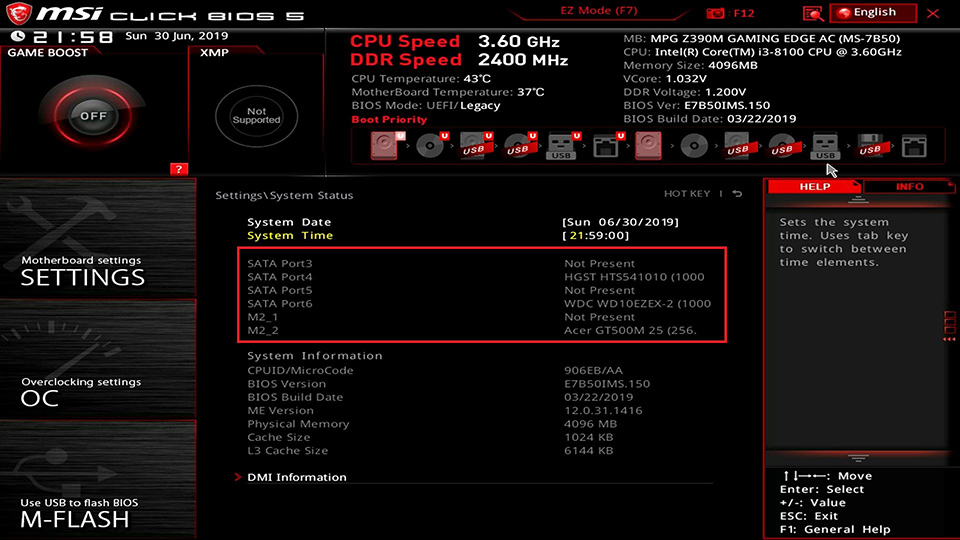
That was when my mouse hovered over the Game Boost buttons.
In the MSI BIOS, right above the main menu, there are three "Game Heave" buttons: one for the CPU, and two for RAM. I had causeless that these were places where you could customize and save overclocking profiles for future use. What I hadn't realized was that their red coloration wasn't merely for show. Information technology's a fashion of showing that they're turned on.
In other words: I didn't have one overclocking profile active. I had iii. No wonder the PC had to shut down and restart every time I booted it upwardly. If it hadn't, something probably would take caught fire.
I deactivated the Game Boost profiles, and watched in awe as the Tom'due south Guide test rig flowed gently from a black screen to my Windows desktop, with absolutely no stutters or shutdowns along the way.
The last few days with this new gaming PC have been an absolute joy. Not only is it a powerful rig for both piece of work and play, but I also feel an incredible sense of satisfaction from solving a seemingly insoluble riddle. While I leaned on the PC-building community for plenty of support, ultimately I was the simply one who could solve my upshot. I met a challenge that seemed impossible, and my reward was a perfectly functional device that I congenital with my ain two hands. If you've ever put together a piece of article of furniture, repaired a household fixture or even only tinkered with a machine, you don't need me to tell you lot how satisfying that is.
For first-time PC builders, I can't promise that the procedure volition go smoothly, and I tin can't promise that you'll find an obvious solution to the problems you encounter along the manner. But I can promise that if you apply reason, creativity and persistence to the situation, yous'll air current up with a much more than rewarding motorcar than a faceless corporation can put together — not to mention, a meliorate tech support squad.

Source: https://www.tomsguide.com/news/how-to-build-pc-troubleshooting
Posted by: sevignymues1965.blogspot.com
0 Response to "How to build a gaming PC for beginners: What to do if it all goes wrong"
Post a Comment